
unival JAMMING SYSTEMS & TACTICAL MEANING OF JAMMING
unival Jamming Systems cover electronic countermeasure solutions designed to disrupt, deny, or control the use of radio frequency signals that may be used for hostile or unauthorized purposes. These systems are applied in security, defense, and protection operations where control of the electromagnetic environment is required to reduce risk and prevent remote activation or coordination of threats.
The tactical meaning of jamming lies in its role as a preventive and protective measure. By interfering with specific communication or control signals, jamming systems limit an adversary’s ability to trigger devices, communicate, or coordinate actions within a defined area. Jamming does not detect threats on its own but acts as a countermeasure once a risk scenario is identified or anticipated.
Jamming systems are deployed as part of layered security and countermeasure concepts and are used under defined operational rules and legal frameworks. Their application requires careful planning, control, and coordination to ensure effectiveness while minimizing unintended impact on legitimate communications.

Jamming and electronic countermeasures
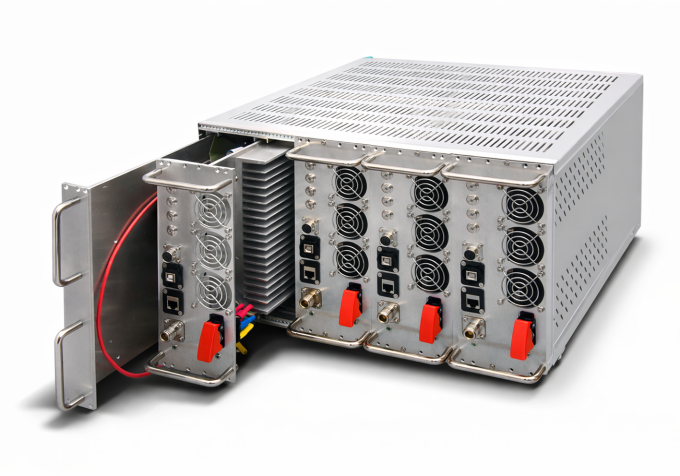
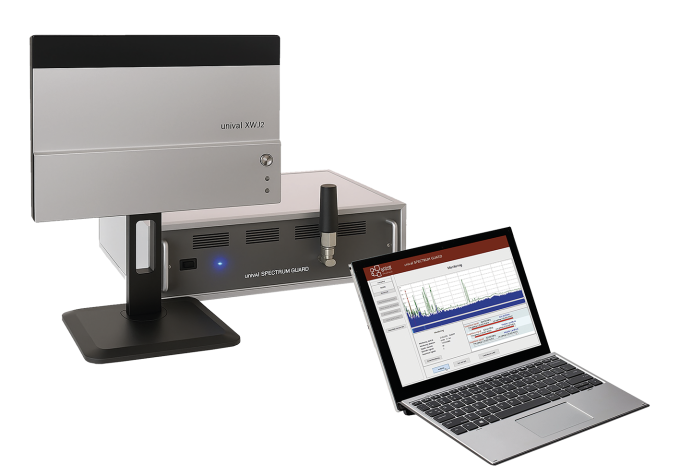
unival group provides programmable jamming systems designed for different threat scenarios and operational environments. The portfolio includes wideband and indoor spectrum jamming solutions that enable controlled signal denial within integrated security concepts.
These systems are intended for use within defined legal and operational frameworks and complement surveillance, screening, and access control measures as part of layered protection strategies.
Operational Applications
unival Jamming Systems are deployed in environments where radio controlled threats or unauthorized communications pose a security risk.

Border Control and High Risk Checkpoints
Protection against remotely triggered threats at border crossings and inspection points.

Prisons and Correctional Facilities
Prevention of unauthorized wireless communications, reducing illicit mobile phone use while supporting secure operations.

Convoy and VIP Protection Operations
Use during movement of protected persons or assets to reduce exposure to radio controlled threats.

Government and High Security Facilities
Countermeasure support for ministries, embassies, military installations, and secure compounds.

Critical Infrastructure and Industrial Sites
Protection of sensitive facilities where remote activation or coordination of attacks could cause severe disruption.

Event and Temporary Security Operations
Deployment during high profile events, summits, or gatherings requiring controlled electromagnetic environments.

Military and Tactical Operations
Support for field operations requiring denial of hostile communications or remote triggering mechanisms.
The Threats Organizations Face
Organizations operating in high risk environments face threats that rely on wireless communication and remote control.

Radio Controlled Explosive Threats
- Improvised explosive devices triggered via radio signals,
- Remote detonation attempts targeting checkpoints or convoys.

Unauthorized Drone and Remote Systems Control
- Use of wireless links to operate unmanned systems,
- Remote reconnaissance or delivery of payloads.

Hostile Communication and Coordination
- Use of radio or cellular networks to coordinate attacks,
- Command and control of hostile actors.

Electronic Surveillance and Interception Risks
- Unauthorized monitoring of security operations,
- Exposure of operational communications.

Dynamic and Time Sensitive Threats
- Rapidly evolving threat scenarios requiring immediate countermeasures,
- Limited time for physical intervention.

Unauthorized Wireless Device Presence
- Hidden or unapproved wireless devices operating within secure areas,
- Creation of blind spots in monitoring and response efforts.
How unival Jamming Systems Help
unival Jamming Systems support security and defense operations by providing controlled disruption of hostile or unauthorized signals within defined operational parameters.
SOLUTION

Disruption of Radio Controlled Threats
The capability is designed to interfere with remote control signals used to initiate or activate hostile devices:
- Interference with signals used to trigger explosive devices
- Reduction of risk from remote activation mechanisms

Control of the Electromagnetic Environment
Operations are supported by limiting selected communication channels within defined protection zones:
- Denial of selected communication channels within protected zones.
- Support for controlled and predictable operational conditions.


Support for Risk Based Layered Countermeasures
Countermeasures can be deployed selectively as part of a broader, layered security strategy:
- Deployment based on threat assessment and intelligence.
- Integration with physical security, screening, and surveillance measures.


Protection of Personnel and Assets
By reducing the risk of remote activation, the capability supports safer protection of people, vehicles, and critical assets:
- Reduction of exposure to remotely initiated threats.
- Support for safer execution of security and protection missions.


Operational Flexibility and Tactical Control
The system allows operators to adjust coverage and operating modes to match mission requirements:
- Adjustable coverage areas and operational modes.
- Use in fixed, mobile, or temporary deployments.
